Showing posts with label Environment. Show all posts

Saturday, April 12, 2014

Where to recycle your gadgets?


Spotted at the Environment Building, a recycling bin for general electronic waste by Starhub.

If you are like me, a bit of a gadget head, changing your phones every 2-3 years when the contract end, and buying a new computer every time the old one fails but can't bear to throw the old one away? But when you try to sell them you realize they are worth nothing or you can't get anybody interested? Or seriously who would buy that old cordless phone or mouse that broke right? Well now you have a better outlet than throwing them down the rubbish chute to be incinerated and add on to our burgeoning landfill at semakau.

RECYCLE!

Here's a list of collection points that you may find handy.

Interestingly, Paul W had suggested on Facebook that these collection initiatives should share what they do with the ewaste. Is anybody interested to contact these companies and organise a visit? I have a bunch of people who wants to learn more. Drop me an email!


Read full article here

Wednesday, April 13, 2011

Picnic for the Planet


For Earth Day this year, the Nature Conservancy has started their 2011 Earth Day campaign, called Picnic for the Planet (See more at nature.org/earthday)

The campaign is asking people to celebrate the planet by rounding up some friends and taking the planet out to lunch. They already have a number of meetups going on around the globe. You can just visit their map to find a picnic near you or see how you can start your own. There are currently 2 picnics happening in Singapore. Do you want to organise a walk + picnic to celebrate Earth Day? Post it on the Nature Conservancy Meetup.com Singapore page.

Want to do more? Read on!

Visit Nature Conservancy's top 5 Earth Day action list below. If you like the list, feel free to link or blog about their Earth Day campaign on your blog; and any social media outlets :)

Top 5 Earth Day Actions

1. Eat Smart http://earthday.nature.org/smart/
Eat Smart. Learn what’s in your food! #picnic11

2. Eat Local http://earthday.nature.org/local/
See where @Nature_org conservation work & food production intersect. #picnic11

3. Eat Sustainably http://earthday.nature.org/sustain/

4. Eat Green http://earthday.nature.org/green/

5. Eat Out http://earthday.nature.org/picnic/
Get ready for #EarthDay! Find a local Picnic for the Planet! #picnic11


Read full article here

Tuesday, January 05, 2010

Impacts of Marine Aquaculture & Possible Solutions

It has hit the news of late that algal bloom over the Straits of Johor have deeply impacted the fish farms clustered in the straits off Pasir Ris, Changi and Pulau Ubin. A reporter from TODAY contacted me yesterday asking for comments on the impacts of fish farms and some possible solutions to allay these possible environmental impacts. This was probably after reading my blog post on Pulau Ubin Stories on Red Tide affecting Pulau Ubin. Interestingly, in September 2009, I also commented about the need to manage our aquaculture farms carefully in a Straits Times article about vanishing Kelongs in Singapore.

Knowing the limitations of a news article, I decided to share my long reply on this blog with all my readers as well. I must confess that I am no expert in aquaculture or marine systems, but here are my two cents worth based on some research I did doing my blog post as well as projects done on aquaculture in university.

Fish farms, if done sustainably, are important for supplementing our seafood supply and prevent overfishing. However, fish farms if not managed well, could result in major environmental pollution and further harm the wild population of fish in our seas. The sea is not an enclosed farm with concrete walls and any food, antibiotics fed to the fish, as well as the fish waste would eventually dispersed into the sea.

Also the household waste and sewage of the farm also needs to be managed properly. In a deep sea system with good water circulation, perhaps the concentration of nutrients and chemicals would be naturally diluted by the ocean currents. However, in the straits of johor, there is very poor circulation of water due to the causeway blocking circulations. Furthermore, locating large number of fish farms in clusters with poor circulation is potentially problematic as the sea is unable to naturally dilute the nutrients.

When nutrient level is very high, massive algal bloom will occur which may deplete oxygen supply in the waters. This not only kills the fish in the farms but all wild fish population. If the species of algae blooming contains toxin, then when humans consume the seafood affected by this algal bloom, they too will become sick.

For fish farms located near river mouths like those at Changi and Pasir Ris, they are affected by the monsoon flood discharges from both Singapore and Malaysia. The freshwater will float above the salt water and prevent oxygen from circulating and resulting in fish death as well. But these flood discharges may also carry with them more nutrients from agriculture or sewage discharges from the land into the sea. Combined with existing nutrients from fish farm, these could easily exacerbate the problem.

For solutions, we can do several things:

1) Understand well the geographical environment and ecological system of our waters before we locate our fish farms. For example, the fish farms off Semakau were not affected by the mass death because they are not near the coast or river mouths,and they have good circulation. Make sure that fish farms are not located too near existing coral reefs as well to minimise impact to our wild fish population. Changi, Ubin and Pasir Ris are all very near existing reefs such as Chek Jawa, Changi and Pasir Ris. Monsoon flood discharges will happen every year so perhaps locating far from river mouths and coastal areas will be helpful.

2) Do not cluster too many fish farms together in close vicinity to one another. This reduces the environment's natural ability to dilute pollutants and nutrients in the water. Overcrowding is a known problem in aquaculture. Both overcrowding of fish in each cell of a farm, and in this case, overcrowding of farms in one area with poor water circulation. [On hindsight: It's important to have scientific studies done on the treshold and carrying capacity of our waters and the number of fish farms it can support without resulting in future calamities]

3) Strong regulation and monitoring of fish farm practices are most critical. The amount of antibiotics and fish feed given, how the farms deal with fish waste, as well as, the sewage and household waste from the farm should be strongly regulated and monitored. Farmers should also be educated on proper practices. Good practitioners should be rewarded and best practises shared.

4) Consumers can also play a part in encouraging good practises if fish farms can be awarded sustainability labels for good practises by the government. These sustainable fish farms should be rewarded by consumers by buying only these sustainably-reared fish, identified by these labels. Most of the time, the problem in Singapore lies with ambivalent conusmers who do not question where their fish comes from. Also, there is a lack of information in our markets and supermarkets where there are no labels indicating origin of fish or how they are reared, especially those from local fish farms.

Please feel free to share your ideas and comments. Have you spot any factual errors? Please let me know!

Related Reads:
Marine Aquaculture, David Suzuki Foundation


Read full article here

Saturday, January 02, 2010

NEA reaching out to new migrants

Chinese Version Tamil Version?

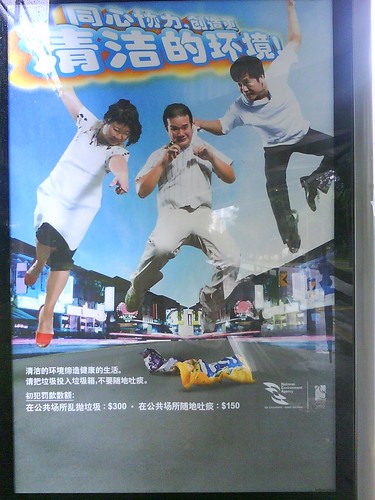
Spotted at 2 consecutive bus stops along boon lay way - the indian one at lakeside mrt and the chinese version one bus stop later. It's very interesting and creative for NEA to adopt targeted marketing outreach at our new migrant populations, using cultural design styles which they may be familiar with. It may also be the population in this residential area which sees large number of new transient migrants. Before you think it's discrimination, we must acknowledge that it is important to educate those who may not be familiar with our many 'fine' laws. These are purely information posters from what I can see. Anyone know which language is the indian one in? Hindi? Tamil? Urdu? Bengali?

Just as we need to understand more about natural systems when we design our developmental infrastructure, we also need to take into account cultural systems when we design our outreach efforts. Props to NEA for their creative effort!

On hindsight: @struthious on twitter commented that the ads are targeted at "foreign workers" and not "new migrants". I think that the issue here is their "newness" so let's not dispute whether the ads are for transient workers or new citizens. And we definitely cannot stereotype the demographics of what constitute "new migrants" - whether citizens, permanent residents or transients. Cultural habits, and baggage(!), may also transcend education background. For all its worth, I'm sure it'll serve its purpose for all new to Singapore. And perhaps some Singaporeans too!


Read full article here

Thursday, October 15, 2009

Blog Action Day: Acting for Climate Change

A lil late for Blog Action Day but nonetheless! This year's theme is on climate change and for this whole week, the topic has been high on my attention. Mostly because I was attending a launch of the video "High Stakes" at British High Commission on Tuesday and attending a talk by lecture by James Leape, Director General of WWF on COP15 on Wednesday.

The video "high stakes" is a visual summary of the ADB report on the "Economics of Climate Change in Southeast Asia: A Regional Review". I suppose it's really handy when people could not sit through reading a dry report on the topic. Instead, the short film explained using visuals, graphics, dialogues and interviews.


After the film screening is a talk by Mr James Hardy who founded the Green School in Bali. The school is built entirely of bamboo and engages local artisan craftsman to help build just about everything in the school! To add to that, the curriculum of the school involves both conventional English Math Science syllabus as well as an ecological environmental science component and learning creative arts! Sounds like my dream school. After the presentation, I cannot stop thinking about moving to Bali to teach in the school and be part of this wonderful project. To learn more about the school, visit their website. Interestingly, Mr John Hardy was interviewed in this Reuters article today.

Being involved full time in a wonderful project like that, living and working in an effort to make this world more sustainable, for and with our future generation, now that's action!


Read full article here

Thursday, August 06, 2009

Haze is back


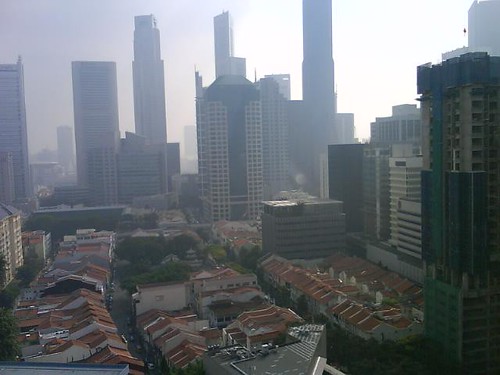
This morning I took this picture from my office building. Seems like the haze is back indeed. Although I saw the haze at home this morning, a visit to NEA website this morning stated PSI was still good. I wonder if it got worse in the next update. Oh well. This Channel NewsAsia article shows that it did.

Haze in Singapore as 50 hot spots detected in Sumatra
By Hasnita A Majid, Channel NewsAsia
06 August 2009

SINGAPORE: The haze is back in Singapore and you can expect more hazy days ahead.

Smoke haze shrouded Singapore on Thursday morning, with an acrid burning smell hanging in the air.

And the Pollutant Standards Index (PSI), which measures the air quality in Singapore, was around 60 on Thursday.

Though this is still in the moderate range, it is however slightly higher than Wednesday's reading of 52.

Smoke haze has been blowing into Singapore and the National Environment Agency (NEA) said that over the past few days, its satellite pictures detected significant hot spots with moderate to dense smoke.

The hot spots are mainly in the Sumatran provinces of Riau, Jambi and South Sumatra.

On Thursday alone, 50 hot spots were detected in Sumatra.

NEA added that with prevailing dry weather in the region and the wind direction expected to remain the same in the next few days, hazy conditions can be expected in Singapore over the next few days.

Doctors have cautioned against outdoor activities if the situation worsens, especially for those with respiratory illnesses.

Dr Chuah Li Li, a general practitioner from My Family Doctor, said: "Usually the discomfort is felt in the eyes, where people will feel there is a little bit of the smarting discomfort or a dry sensation. The other thing that you might feel is the throat discomfort.

"For people who have lung problems, chronic obstructive lung disease and asthma, there might be a sensation if there's a little bit of difficulty in breathing and a chest tightness or cough.

"Elderly people with pre-existing lung condition or children with asthma should actually cut down on outdoor activities, especially strenuous activities like playing basketball and football."

But members of the public are not too concerned about the situation now.

"At the moment, still not so serious, maybe if it gets serious, we will do some precautionary measures," said a member of the public.

Singapore has expected the haze to return this year as the El Nino weather phenomenon develops, bringing with it hotter and drier weather.

The situation is expected to worsen in the coming months, especially when the dry weather peaks in September.

The haze is the result of smoke from slash and burn activities in Indonesia, when farmers clear their lands to make way for new crops.

Hot and dry weather can also cause dry twigs and leaves to burst into flames spontaneously.

Just recently, Singapore handed over three air and weather monitoring stations to Jambi Province in Sumatra to help calculate the risk of fires starting and spreading in the surrounding areas during dry weather.


Read full article here

Thursday, July 02, 2009

Thinking about Bio Walls


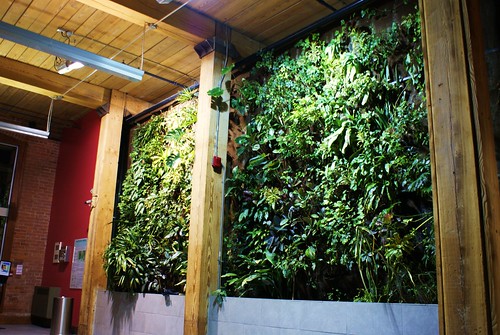
"Living Wall" by Intrepidacious

Today on Twitter, Debby (@torvaanser) of Pulau Hantu Blog posted a question: "What do u think abt biowalls (aka living/greenwalls)? Are they all they claim to be? Wld u like to see more of them? http://is.gd/1l7qO"

So, what are BioWalls? What do I think of them? Monkey was put to task to think about these biowalls as I sought to answer these questions for Debby's article about the increasing installations of BioWalls in Singapore.

Biowalls are usually a wall with plants growing on it, and a big hype in green building designs of late. They are supposed to serve wonderful purposes such as insulation from heat (as building facades) or air and water purification (as walls inside buildings).


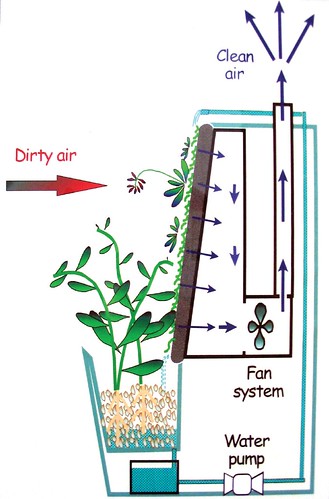
Biowall Diagram by The Robertson Building
Ideally, a Biowall should serve these functions as illustrated in this diagram. This was installed in the robertson building in Canada.

So what do I think?
Active biowalls are a wonderful ways to combine technology with natural ecosystem services such as air or water purification by plants in our buildings for example. However, if these biowalls are not fully integrated into building systems design, it defeats the purpose of installing the "so-called" biowalls. They become merely aesthetic horticultural features, making them no different from existing floral features.

We all know Singapore love to sell ourselves to be clean and green. But having just a wall made up of plants without proper integration into the building to allow it to provide environmental services to us, then that does NOT make it a "biowall". They would just be another piece of indoor plant decor "art". If building developers still went ahead and label them as "biowalls" then i definitely smell greenwash in the air.

So the next time you see a "biowall", let's be critical and ask about the natural services these plants provide for the building, if any. But if building developers do make a concerted effort to fully harness the potential of these walls then we should definitely applaud them for it! Kudos.


Read full article here

Sunday, April 19, 2009

Meeting with Resorts World


A continuation of my engagement encounters with Resorts World.

Yesterday, a group of people who were interested in developments at Resorts World was invited for a closed-door meeting at RWS headquarters on Sentosa. Naturally, the first thing I had to do was make sure that I could at the very least blog the above statement.

In the event that I would make any further faux pas, I checked with Krist Boo (Vice-President, Head of Communications, Resorts World at Sentosa) who called the meeting, if I could at the very least mention that such a meeting occurred. Alas she paused for a while but monkey eventually got the green light to let it be known that this meeting took place. I hope that writing this doesn't get anybody in trouble! *fingers crossed*

To quote Krist at the beginning of the meeting, "We believe in doing what is right" and "we are committed to engage you". And that's why were all sitting there at 10am on a Saturday morning (18 Apr 2009).

At the end of the meeting, we were also asked to actively engage RWS instead of waiting for them to engage us. Moral of the story is, don't hesitate, start emailing RWS if you have questions and don't wait till information falls on your lap.

I truly hope to believe that RWS is really sincere in engaging stakeholders and are trying to do so, to the best of their limited abilities. So kudos for trying. I want to believe it when they say that they have to do it first in order to prove to us that they are doing it right. Hopefully it would not be too late by the time things are cast in stone.

Again, I must say that my intentions of blogging this is purely, and somewhat optimistically or naively, to share the fact that RWS is doing some form of engagement. In the field of environmental management and in my personal opinion, engagement is an important and wonderful thing. I like sharing wonderful things with my readers.

I can only hope that this is the beginning of more engagement and collaboration with Resorts World and other corporate entities in the future. If so, that would be a good progressive step in Singapore's business environment and civil society.

Why is engagement a wonderful thing?
Here's a document by The Chartered Institution of Water and Environmental Management that explains briefly why "public, private and voluntary organisations preparing policies, plans, programmes, and projects relating to the environment should develop and implement policies for stakeholder engagement". [Read the document here]

Previous posts on Resorts World:
I signed the No Whaleshark petition, have you?, 12 Mar 2009
A chat with Resorts World, 2 Apr 2008
EIA of Sentosa Integrated Resort, 30 Jan 2008


Read full article here

Tuesday, April 14, 2009

Eating "Trash"


A few days ago, a friend sent me this video. It reminds me of slumdog millionaire except more poignant without the hollywood ending. I was reminded again of this video when my colleague and I were talking about how we don't blink an eye at how much food is wasted in affluent societies. Singapore being one of them. But while there are those scavenging the trash for food, there are also those who purposefully dive into dumpsters looking for food and not because they cannot afford buying! But they were doing it because they are "freegans"

Although dumpster diving is often associated with the poor, a new movement (freeganism) concerned with environment, anti-consumerism and all the conspicuous consumption (and waste) as well as urban poverty issues have begin to emerge in recent times. There is also an anti-hunger organization called Food Not Bombs gets a significant amount of its food from dumpster diving from the dumpsters at small markets and corporate grocery stores in the US and UK. Food Not Bombs have also taken off in Singapore and there have been attempts to collect some of the food that are regularly being drawn out by wholesalers and supermarkets in Singapore. Even though these food are being throw away, they are not always inedible. They then use these materials to provide food for the homeless in Singapore. Yes, we have homeless people!

The first time I heard of dumpster diving is from 2 young Australians who were part of a team going to Poznan, Poland for UNFCCC-COP14 by land last year (2008). They were well educated university students who were definitely capable of paying for their food. But one of them told me that he is a "freegan". I was simply amazed that he would eat food picked out from dumpsters and he told me that it is amazing how much good stuff you can find in the dumpsters of supermarkets. Surely the singaporeans amongst us who loves a good deal will know of how bakeries offer food for cheap at the end of the day before they close. Those food if not sold, will have to be dumped. And as long as they are not dumped, they are perfectly good to it! And if dumped, they can still be eaten if you pick them up straight away! Apparently the usual practice is to negotiate with the owners so that they will give the freegans these food that's meant for the bin. Likewise, a lot of vegetables are thrown away if they have blemishes or do not meet certain aesthetic demand from hotel restaurants or fast food chains or even supermarkets consumers who wouldn't buy vegetables with holes or fruits that are bruised.

Speaking for myself, I find that being an urban Singaporean living in an affluent country, I find such affront at considering the possibility of eating food from the dumpster.
Honestly, freeganism is pretty extreme even to me and my mind is still reeling from it now as I write.

Yet at the same time, there are people like those children in the video who have no choice but eat food from the dumpster, if there's even scraps left. Look at the face of the little boy who cheered at the sight of spaghetti served from the rubbish bin. It wrenched my heart.

Somebody mistakenly thought the video is about globalization and poverty but I think showing the fast food restaurants is merely commenting about how much food we usually waste in our daily meals. Fast food restaurants are pretty much frequented only by the middle class and above in many developing countries, such as Manila which was featured in the video. Do you think about the food that you can't finish at lunch or dinner? We try to console ourselves that there is now food recycling where food waste is used to generate fuel and energy. But how about going one step back? Buy what you need and finish everything you can. What is trash to you is food to many. As long as we don't get food poisoning from eating it, why are we not eating it?


Read full article here

Thursday, March 12, 2009

I signed the No Whaleshark petition, have you?

Today I signed a "no whaleshark in Singapore" petition that is supported by many major organizations locally and internationally such as PETA, Sea Shepherds, ACRES, Cicada Tree Eco-Place and the Green Volunteers.

The good thing about this petition is that once I put my name down to the form, it will email the pre-written letter (which you can also edit to customize) to the 1) Minister of National Development, 2) the Singapore Tourism Board and 3) Resorts World at Sentosa.

Shortly after I click sign, I got an automated reply from Resorts World with the following:

Corporate Social Responsibility "csr@rwsentosa.com" to "leafmonkey@gmail.com" 5:23pm

Thank you for taking the time to write to us.

We will be compiling your comments and addressing the points raised. Do visit our website (www.rwsentosa.com) for updates.

We look forward to welcoming you at the Marine Life Park.

The Marine Life Park Team
All I can say is, I will not be visiting the Marine Life Park.

And that is precisely why I signed the petition isn't it? How could they be asking me to visit the marine life park? I will not use my consumer dollars to support the captivity of large marine mammals. It's interesting that the whaleshark petition website quotes Jacques Cousteau. When I was in US, I was the news intern for Jacques' son, Jean Michael Cousteau's Ocean Futures Society who actually led the campaign to free the star of Free Willy, Keiko. Since then, I have never visited a single "marine life park" or "sea world".


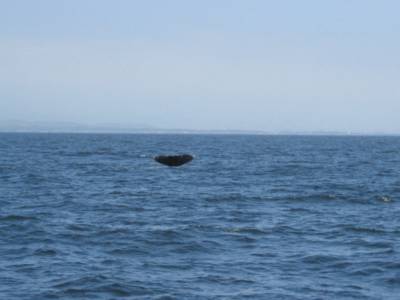
Whale flute sighted in the wild. Photo taken in 2005.

Definitely not after I had the pleasure of going on a whale kayaking trip and seeing these large animals free in the wild. A whale shark is not a whale but there is no difference. Besides, first a whale shark, next a whale? No animal of that size should be kept in a tank. No fish tank would ever be big enough to replace the ocean. This is not a gold fish we can flush down the toilet bowl after it dies. Are we willing to take responsibility for that?

Have you signed the petition yet?


Read full article here

Wednesday, March 11, 2009

Volunteers needed to promote Earth Hour at IT Fair

Earth Hour was started in Sydney in 2006. 'One Hour, No Power' was the original tagline. For one hour, the Sydney Opera House turned off its lights to show its commitment and spread awareness for climate change. It was an event to reduce their carbon footprint, in bid to reduce global warming. Today, it is no longer a Sydney event, but a global movement. This year 2009, Singapore has made a stand and will be officially committed to Earth Hour. Even the DPM's office made a pledge to do so! This year, it will be lights out Esplanade!

In Singapore, Earth Hour is organized and managed by the Singapore office of WWF (World Wide Fund for Nature) and recently they were informed that they would be able to promote Earth Hour at the upcoming IT Fair at Suntec this week. Knowing the turn out at these IT fairs, this will reach out to a huge number of people. Thus they are urgently looking for volunteers. Below is the email request from them.

Dear Volunteers,

I have received last minute information that we WWF can promote Earth Hour during the IT fair at Suntec this Thursday till Sunday (12-15th March).

We will be sharing a booth with SingTel (an Earth Hour sponsor!), to promote e-billing as well as Earth Hour! It will be a wonderful opportunity to meet people and raise awareness of Earth Hour as, we all know the crowd during the IT fair will be humongous!

I understand that it is extremely last minute, but if you are able to make it and would like to volunteer, please let me know.

12th (Thurs): 12pm - 4:30pm / 4:30pm - 9pm
13th (Friday): 12pm - 4:30pm / 4:30pm - 9pm
14th (Saturday): 12pm - 4:30pm / 4:30pm - 9pm
15th (Sunday): 12pm - 4:30pm / 4:30pm - 9pm

As usual, please let me know which time slots you are available. If you are able to volunteer for the whole day, you're more than welcomed!

Thank you very much once again for all your support. 17 days to Earth Hour!
Warmest regards,
Jane
63230100
GJLam@wwf.sg
If you are not free this weekend, they are also looking for volunteers for the following:

* roadshows/exhibition (21st to 27th March)
o to coordinate with WWF Singapore
o you need not commit everyday - even a single shift or two (two shifts a day) will be great.

* on site for CBD area on 28th March.
o to coordinate the 'Black-out' of the buildings

* on ground at Esplanade Park on 28th March.
o to faciliate and manage the crowd and event at the park.

To help out with these activities, contact Tan Sijie Ivan (ivantsj@gmail.com)
There will be a training session this Sat, 14th March, 2pm at Botany Centre, Singapore Botanic Gardens with WWF (Map attached). It will be a simple training session lasting no longer than 2 hours.


Read full article here

Friday, February 27, 2009

Job Vacancy for Director, NUS Office of Environmental Sustainability

Reporting to the Deputy President (Administration), the Director will lead the Office of Environmental Sustainability (OES) to relating to campus sustainability strategies and initiatives, with a view to broadening its role to include environmental performance auditing. The incumbent will be responsible in the following:

- Strategize the integration of sustainability in all aspects possible,
establish NUS sustainability goals and develop a campus sustainability
roadmap.
- Identification and facilitate adoption of applicable best practices in
campus development and operations.
- Establish communications strategies with campus stakeholders to
promote awareness of initiatives as well as to educate them.
- Lead, guide and monitor sustainability initiatives and performance to
achieve sustainability targets.
- Build partnerships and collaborate with other organizations and leading
universities with matters related to campus sustainability.
- Build partnerships and collaborate with other organizations and leading
universities with matters related to campus sustainability.
- Management reporting

Requirements:

* Bachelor’s Degree in architecture, urban or environmental planning, environmental science, environmental engineering or equivalent in an appropriate field, with an advanced degree preferred
* Minimum of 5 years experience in leadership position, implementing sustainability programs, or programs in a related field such as planning, environmental or environmental technology or resource management, facilities, or architecture.
* Good understanding of sustainability theories as well as local, national and global sustainability initiatives and best practices. Ability to apply theories and initiatives in practical setting.
* Good EQ, excellent oral and written communications skills

Download Application Form (.doc).
For application or enquiries NUScareers_executive@nus.edu.sg

More information here


Read full article here

Sunday, January 11, 2009

Job opening at the new NUS Office of Environmental Sustainability

The Office of Environmental Sustainability was recently set up to help NUS monitor and improve its environmental performance. The office is now looking for a resourceful Sustainability Executive with a passion and relevant skill sets to join the young dynamic team.

The position shall maintain close liaison with NUS stakeholders to achieve NUS sustainability goals. Reporting to the department head, the Sustainability Executive is responsible for developing physical implementation programs related to energy management and sustainable development. This includes monitoring and evaluating program effectiveness, documenting environmental performance trends, and recommending/implementing modifications to improve program effectiveness. Through interactions with the NUS community, the position shall foster and coordinate new ideas and concepts for sustainability programming themes and identify materials and resources to supplement, expand or replace existing sustainability programming. Part of the work scope requires coordinating and implementing activities including, but not limited to, seminars, workshops, and campaigns at NUS.

The manner in which these programs and activities are organized and the nature of their content should be geared towards achieving buy-in and habit transformation from student, faculty and staff community members. The Sustainability Executive shall also be responsible for representing NUS’ sustainability programs to the public; attend professional meetings as appropriate; and interface with external organizations to ensure cooperative efforts are enhanced and available resources are utilized.

Requirements

  • Bachelor degree, preferably in environmental, facilities management or related discipline
  • Highly motivated, adaptable, flexible and resourceful
  • Cheerful disposition
  • Team player
  • Excellent spoken and written English
  • Excellent CCA record
Monkey says, "The position is available immediately as they are looking for people to start work urgently. Interested applicants can contact Mr Loo Deliang at oesld at nus dot edu dot sg, Tel: 6516 1983"


Read full article here

Thursday, October 30, 2008

Upcoming Workshops by The Leafmonkey Workshop

The Leafmonkey Workshop (TLW), my latest "job" and project is essentially an effort at filling in the gap in the local nature community by providing "capacity building" for nature guides and volunteers. As such, we have organized an series of upcoming monthly workshops that hope to provide further content training as well as how to effectively share these information with ordinary people. All interested are welcome to join us! Remember, pre-registration is a must :) Read Workshops FAQ

7 Nov 2008 . 7pm - 9.30pm
The "Star-Studded" Echinoderm Workshop

5 Dec 2008 . 7pm - 9.30pm
The Easy (Not Hard) Cnidarians Workshop


Best of all, remember to join our Facebook Page as a fan to receive updates on upcoming workshops and events!


Read full article here

Wednesday, September 17, 2008

Going to Peru 1-6 Oct


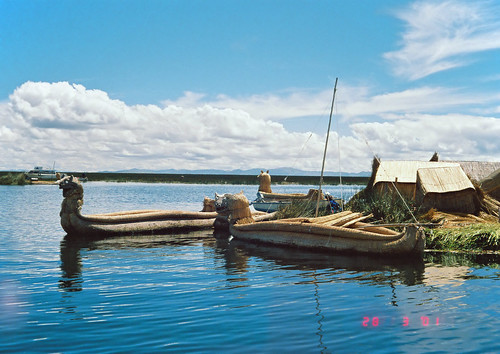
Reed boats Harboured at Floating Island, Lake Titicaca, Peru by Pet_r

Last friday I got a phone call out of the blue from the National Youth Council. They would like to nominate me to go to Peru to attend an APEC Youth Camp from 1 to 6 October and asked if I was interested. Despite the logistical nightmare of managing going to Japan and then Peru, I decided to agree because as so many has said, this is a once in a lifetime opportunity. The camp is on sustainable development and water issues, attended by youths from various APEC economies. What more, next year, Singapore is hosting APEC and I will get a chance to organize an equivalent event i Singapore which r0x0r mah b0x0rs!

In order to attend, I had to write a 1500 words essay on water issues and so I wrote about where Singapore can take its next step in water management and building a "water culture". If you're interested, you can read my essay here.

So on 29 September, I will be flying direct from Narita Airport to Lima, Peru. Less connections, less fuel consumed or so I console myself. The camp venue is at lake titicaca in Peru which borders Bolivia. It is supposed to be an example of well managed water resource in the country. Pictures of it reminds me of a surreal version of a "coastal" indo-china up in the mountains 4000m above sea level. If I have internet connection in Puno, Lima, I will update the blogs with happenings at the camp.


Read full article here

Wednesday, September 10, 2008

Help needed to identify the sea monster


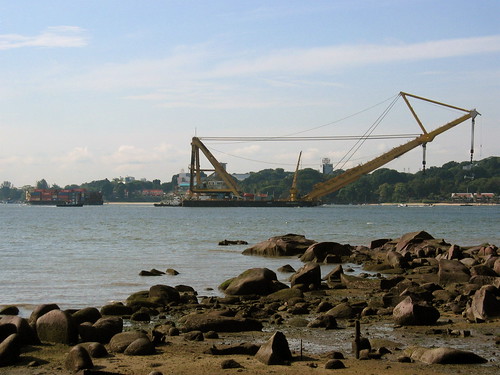
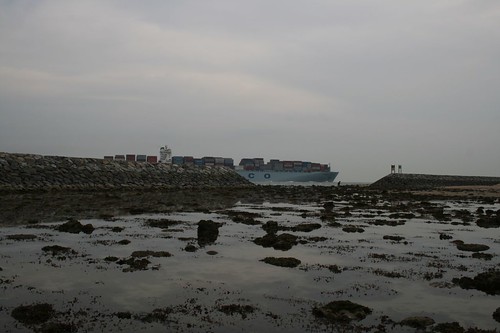
Could somebody familiar with these maritime industrial monstrosities out at sea please help to identify what this might be? So what is this yellow monster used for? We know it's not a dredger. And it seems to be transported somewhere (to Sembawang or Pasir Gudang perhaps)? Or was it something you use at sea? So many questions, hardly any answers at all. Would some wise maritime guru please advice?

This photo was taken from Pulau Ubin on Saturday 6 Sep 2008.

For scale, we have a tiny (in comparison) container ship on the left of the monster.


And for further scale comparison, this is how a human (that speck of dust over there) compares to a container ship!


Read full article here

Wednesday, August 20, 2008

Monkey on ST Digital Life

"Enjoy Tech the Eco Way"
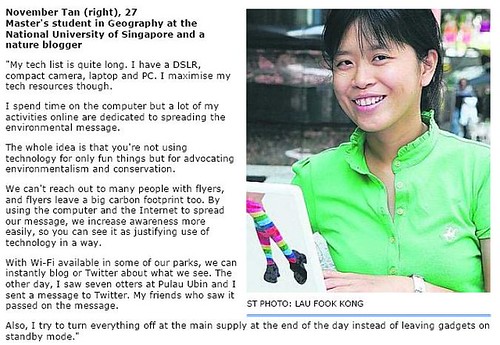
Be a techie and still save the earth; THAM YUEN-C gets tips from two greenies
Straits Times Digital Life
20 Aug 08


Read the full article here.

A few days ago, Ria emailed me saying that Digital Life is interested in doing an article about how to be "green" with tech-related lifestyle. I thought that apart from talking about the usual "save electricity, reduce carbon footprint" spiel, I can talk more about what we have been using technology for in terms of "eco social media". I just want to clarify that my quote was edited and "advocating conservation and environmentalism" can be fun too! Here are some fun things that didn't manage to get fitted into the tiny newspaper column!

1. Reduce your carbon footprint
Well the most basic of being "green" is to reduce your carbon footprint. That's the buzzword in this globalized world these days. How can we do that? Switch off your gadgets, blah blah blah. But how about less gadget upgrading? It just wasn't possible to include this in press as all their advertisers would be quite upset. Honestly I've resisted upgrading my phone for the last 5 years. And trust me, it takes a lot of effort! Resist resist. resist the iphone. resist a pda phone. resisted the nokia n-series with GPS! It's not easy but it's healthier. When they say I have a long list of gadgets, I meant I travel with all of those (except PC) perpetually. Not forgetting peripherals! How do I make sure I don't die from overexposure to electromagnetic frequencies?

2. Get away from your computer more often!
Go out and be with nature more. If you have followed my "lights out" project, I really tried doing that. Lights out is not just about switching things off but reacquainting yourself with life away from gadgets. I don't sit in the dark. I go out and be with nature, be with family, friends and people instead of sitting in the dark! Savor the sweet scent of tembusu as it blooms in the dark. Listen to the hooting of the resident owl beside my office. Chat with friends! Read a book at a library. You get the idea! Very fun one. Confirm, guarantee plus chop!

3. Offset your carbon footprint.

If you cannot reduce your carbon footprint, offset with something more meaningful! I've mentioned this in the article but the idea is that since you are using the gadgets already, use it for something meaningful that will help to do something that will offset the gadget's consumption footprint! There are of course so many ways to do it. :) But please don't just try to buy your way out of this. I think there are many more meaningful and actual tangible ways we can do it. Sometimes we do it without even knowing. For example, by clicking or passing on a message in facebook re: environment, like telling your friend about the I want to go Cyrene Reef facebook group, you are doing something indirectly for the environment!

4. Be self-reflexive!
Interestingly, in a recent AAG Cultural and Political Ecology Specialty Group mailing list, an academic pointed out to the group that if all of us are studying about environmental issues, what are we doing ourselves to offset or reduce the carbon footprint of our own research's travel? We jet around the world to do fieldwork but think of the fuel consumption! It's really important to be reflexive and it was just great to hear that from professors :)

5. Make the most of what you have!
If you read the full article, Hang Chong said something really true too. With gadgets comprising of more tools these days, you can have a universal machine that does everything. But as long as something works, it's good enough too! I constantly catch myself saying to others, "can use can liao lah!". For example, I have a very old nokia phone that doesn't even have a built in camera! But it has GPRS and I can surf twitter on it! I bring my laptop almost everywhere and can use it to skype and call people even when I forgot to bring my phone! Yes it's heavy but one laptop means less gadgets!

6. Embrace the concept of Sharing.

Recently I am in need of a 3G phone to use in Japan when I visit in September. But instead of succumbing to the temptation of buying a new iphone, I decided to crowdsource for a phone to borrow. I posted on twitter and facebook asking if anybody has a spare 3G phone to lend me and voila! Reply within the day. This is great! Playing with gadgets without increasing the footprint. Sharing also includes ride-sharing, carpooling, etc. And the good part? You get to make more friends and appreciate your existing friends more :)

7. Engage your friends!
I must say that I really have a lot of friend "advocating conservation and environmentalism. The so-called "spending a lot of my time online is for spreading the message" include, for example, writing this blog post! Or posting a link on facebook, or chatting with people about it! Actually devising ways to "harness" social media for environment is challenging and fun. But the best is really engaging people. Starting conversations and getting discussions going on twitter when I saw otters was more fun than just the satisfaction of knowing the "message was passed". I enjoy reading the replies from twitter followers whenever I talk about what green things I have (or have not!) been doing.

Remember, it's not just about the environment. It's really about the people.


Read full article here

Friday, August 01, 2008

Sharing session with science teachers

About a month or so ago, a very nice rep from the publishers Marshall Cavendish contacted the leafmonkey via this blog. They asked if I would talk to a group of science teachers about how science is applicable in our daily lives. The publisher gave me a list of science textbook content that I may be able to apply to my presentation since my talk is suppose to correspond and complement the syllabus. The talk's objective is to help science teachers, give them ideas on how to make class more interesting. I think. The talk before mine is by a forensic pathologist! How cool. I've been overdosing myself on CSI in Cameron since one of the only channels we get is AXN.

Anywho, I got ideas from various friends (mainly Ria, thanks! the whole first section is courtesy of Ria's creative juices) and finally decided to try to do everything - as greedy as I usually am.

I organized my talk in 3 parts - learning about nature (using interesting analogies from daily lives), learning from nature (how we can find nature in daily life - ripped from the talk I give the biomimicry class) and finally, living together with nature. The last part is so huge but I've decided to talk about how our daily life affects the environment and specifically, a debut of my freshly experienced research data. Seeing as how I just arrived back from the field highlands less than 12 hours ago, this is really fresh off the oven.

Right after finishing my slides a few minutes ago, I suddenly got gripped with fear. After all, these are science teachers that I will be speaking with. What more, there will be ONE HUNDRED (100) of them! *gulp* I will be talking about biological functions when I've never ever taken biology (except for a general biology module) and last time I studied science was at 16! I will be sure to disclaim in the beginning that what I speak is from field experience, from guiding... and of course, feel free to correct me if I'm wrong. We're all about sharing and exchanging right?

Having said that, do share and comment on my slides. Let me know what you think and if you can think of more interesting analogies, do share. If you're wondering at the lack of text from the 3rd section of my talk, it's because no time to really flesh it out. I've included it in the notes but I doubt slideshare allows people to access that. Sorry, download not available. Apologies and thanks to the people (and animal friends) whose photos I rippedused.

And yes, I recycled slide template. ack. Meanwhile, I shall try to make an attempt to take photos and blog my experience after the talk. Hopefully I'm not too smashed by the end of the day from lack of sleep!


Read full article here

Monday, July 21, 2008

New target for the next Earth Hour?


I finally visited the KLCC-Petronas Twin Towers in Kuala Lumpur for the first time yesterday. The brightly lit building lights up the entire skyline of KL. Then it suddenly hit me that the twins will probably be the best target for the next Earth Hour. Wonder if anybody in Malaysia would try to achieve that?


Read full article here

Saturday, June 28, 2008

Greetings from Cameron Highlands


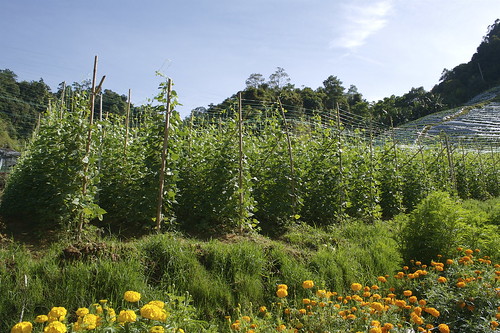
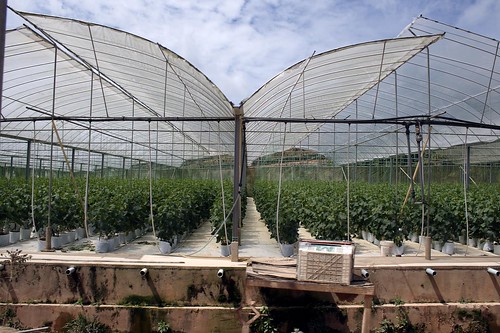
2 weeks into my research in Cameron Highlands on food production amidst rising fuel prices and concern about food shortage. This is really a very critical time when fertilizer cost are rising and food production costs are rising. At the same time, there are also lots of reports in the Malaysian media about illegal clearing of forests for farms and landslides resulting from leaking pipes that farmers use to source for water from the forests to their farms, kilometers away. The leaking pipes led to the weakening of slopes, resulting in landslides and the further polluting of drinking water sources for whole towns.


Meanwhile, I'm learning more than ever in the field on how our food is produced, farmers' concerns and the reality of our consumption. But how real is consumer sovereignty and how do we see our ecological footprint in actual spaces? Why is there such a dearth of information on the consumer side of the equation? I continue my search for answers here for the next 32 days.


Read full article here